
Building Author Credibility and Brand Authority for Search and AI Visibility
For years, SEO was largely focused on keywords.
If someone searched for “press release distribution,” the goal was to create content that matched that topic and answered the searcher's question. That approach is still important, but search and AI-powered discovery systems have become much better at evaluating context beyond the page itself.
Press releases are a clear example of this shift. Whether it’s a product launch, executive announcement, earnings update, or company milestone, distribution now depends on more than keyword alignment. The credibility of the source and the clarity of attribution increasingly influence how content is surfaced, summarized, and understood.
Today, it’s not just about what a page says. It’s also about who created it, who published it, and whether the information can be trusted.
This is especially important across both editorial content and press release distribution, where messaging is syndicated across multiple platforms and interpreted by search engines and AI systems. A clearly attributed, consistent source is more likely to be accurately summarized, cited, and reused than content with unclear or fragmented signals.
Think about how you evaluate information online. If you read content about investing, healthcare, or communications strategy, you likely want to know:
- Who created this?
- What experience do they have?
- What organization published it?
- Where did the information come from?
Search engines and AI systems are asking many of the same questions.
As AI-driven discovery becomes more common, content evaluation has shifted from simple relevance to source reliability. These systems identify pages that mention a topic and that they can confidently summarize and reuse.
That is why attribution signals, like authorship, sourcing, and organizational clarity, now play a larger role in both SEO and AI visibility.
Why Search Engines and AI Systems Evaluate Credibility
Traditional SEO has always relied on relevance, authority, and site quality. AI-powered discovery adds another layer: confidence.
If a system is going to surface or summarize content, it must determine whether the source is dependable. Keywords may help content surface. Credibility often determines whether it is used.
Press releases illustrate this clearly. Because they serve as official company statements, they are frequently treated as primary-source material in search results, news aggregations, and AI-generated summaries. That makes attribution and consistency especially important in distribution.
In this context, the “author” is effectively the issuing organization, and credibility depends less on individual attribution and more on clear source identity, consistent messaging, and recognizable brand authority.
Now consider two pieces of content covering the same topic. Both are accurate and target the same keywords. One is published under a generic byline with minimal sourcing. The other is supported by clear attribution signals, credible references, and a well-established publisher identity.
The difference is not the information itself. It’s the trust framework around it.
That distinction increasingly determines what gets cited and reused in modern search environments, including Answer Engine Optimization (AEO) and Generative Engine Optimization (GEO).
Start With Clear and Consistent Attribution
One of the most effective ways to build trust is also one of the simplest: make attribution clear and consistent.
In press release distribution and syndicated content environments, clear attribution helps preserve meaning as information moves across media outlets, search engines, and AI systems.
Many organizations rely on generic labels like “Editorial Team” or “Marketing Team.” While convenient, this removes context about who is responsible for the content or how it should be interpreted.
Readers tend to trust content more when they can clearly understand the source, whether that is an individual author or an issuing organization. A clear byline or attribution signal tells readers and systems that there is accountability behind the content.
Editorial content should include:
- A consistent author name
- A linked author profile
- Relevant expertise or background
- A record of recent work
- Consistent identity across the site
Think of attribution as a digital introduction. When it is vague or inconsistent, credibility weakens. When it is clear and stable, content is easier to trust from the start.
How does this apply to press releases?
Press releases differ from editorial content because they are not written under individual bylines. Instead, they rely on structured, organization-level attribution signals to establish clarity and credibility.
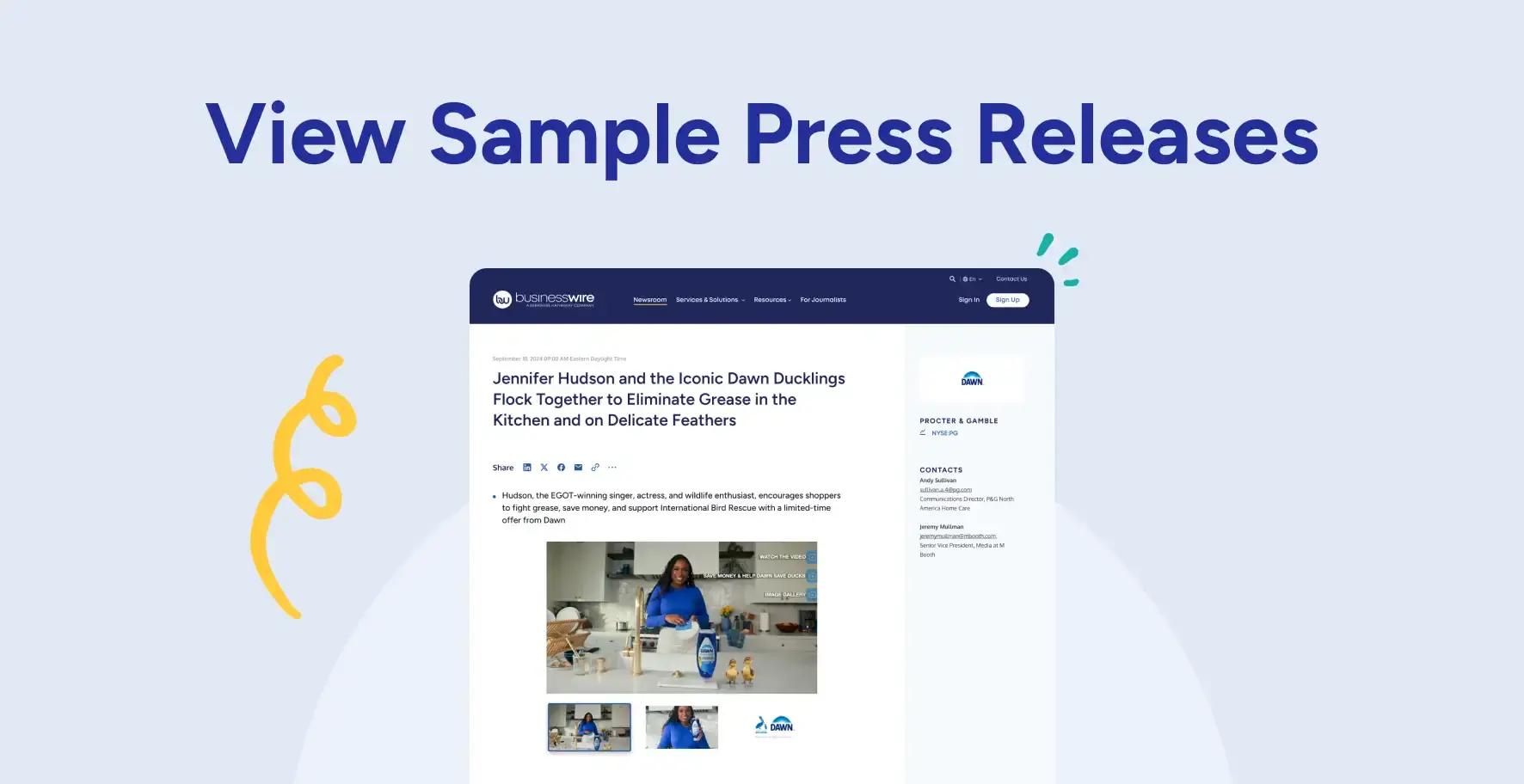
When distributed through Business Wire, these signals are built into the format itself, including the company logo, standardized boilerplate, clear headline structure, release summary, company contact details, and consistent formatting across syndication partners.
Business Wire’s press release features are built to boost visibility and engagement. See how these features can elevate your next release.
Together, these elements clearly communicate the source of the information and help ensure the message is preserved accurately as it moves across media outlets and platforms.
This structure is especially important in AI-driven search environments, where systems look for consistent, machine-readable signals to understand and summarize content. Even without a personal author, a press release can clearly convey “who is speaking” through its organization, formatting, and distribution framework.

Build Author Pages That Actually Add Value
Author pages are often treated as archives, but they function more effectively as credibility signals.
A strong author page answers a simple question: why should this person or organization be trusted on this topic?
The most effective profiles are not long, they are clear. They typically include:
- Current title and role
- Areas of expertise
- Relevant professional experience
- Links to recent content
- Credentials or external profiles when useful
Specificity matters. A communications strategist covering media relations should clearly reflect that expertise. Generic descriptions about leadership or innovation are less helpful than concrete subject alignment.
The goal is not self-promotion. It is context that helps readers and systems interpret the content accurately.
Use Primary Sources Whenever Possible
Strong sourcing helps establish trust in the content itself.
When readers encounter claims or data, they need confidence that the information is grounded in reliable material.
Whenever possible, link to original sources:
- Official documentation rather than summaries
- Original research rather than commentary
- Company announcements rather than secondary coverage
- Regulatory or government sources when relevant
Primary sources reduce interpretation layers and make verification easier.
Press releases are a strong example of this principle. They represent the original record of company news and are frequently used downstream by journalists, search engines, and AI systems.
Not every statement requires a citation, but key claims should be traceable to their origin.
Eliminate Inconsistencies That Undermine Trust
Credibility is often weakened not by poor content, but by small inconsistencies across it.
In press release distribution and editorial ecosystems, even minor variations in naming, messaging, or structure can create confusion once content is syndicated across platforms.
It is similar to encountering inconsistent job titles across a business card, email signature, and LinkedIn profile. Each difference may seem minor, but together they reduce clarity.
Common issues include:
- Variations in author or organization names across pages
- Outdated bios attached to new content
- Inconsistent organizational descriptions
- Metadata that does not match on-page content
- Weak or unrelated internal linking
Individually, these may not stand out. At scale, they make it harder to understand the content’s origin and purpose.
Consistency improves interpretability, and interpretability builds trust.
Brand Authority Is Part of the Signal
Attribution signals do not stop at the author level. The organization behind the content also matters. Readers rarely evaluate content in isolation. They evaluate the publisher as well.
In news distribution, this becomes especially important. A press release is not just a standalone asset; it is a representation of the issuing organization. Strong, consistent branding helps ensure accurate attribution as content moves through search engines, media outlets, and AI systems.
Readers and systems often evaluate:
- Whether the organization regularly covers the topic
- Whether the site appears credible and structured
- Whether related resources are easy to find
- Whether content feels part of a broader expertise area
Search engines and AI systems use similar signals to assess authority. When a site demonstrates sustained focus on a subject, each individual piece of content benefits from that context.
Where Organizations Commonly Fall Short
Most credibility issues are not caused by major failures. They come from small gaps that accumulate over time.
Common examples include:
- Generic or inconsistent bylines
- Missing or underdeveloped author pages
- Overreliance on secondary sources
- Outdated author or organizational information
- Inconsistent branding across content
- Weak internal linking between related topics
- Inconsistent messaging in press releases across channels
None of these are difficult to fix individually. The challenge is that they often go unnoticed until they compound across many pages.

A Simple Content Credibility Check
Before publishing, review content through three lenses:
Attribution
- Is the author or organization clearly identified?
- Does the attribution link to a meaningful profile or source page?
- Does it establish relevance or authority?
Sources
- Are key claims verifiable?
- Are primary sources used where possible?
- Is supporting evidence easy to trace?
Brand Context
- Does the content align with the site’s expertise?
- Are internal links reinforcing related topics?
- Does it fit within a broader content ecosystem?
This review process is quick but helps strengthen clarity, trust, and discoverability.
What This Means for SEO and AI Visibility
Search is no longer defined by keywords alone. Discovery systems increasingly evaluate the people, organizations, and sources behind content. The easier it is to understand who created something, why they are qualified, and where the information comes from, the more likely it is to be trusted and reused.
Press releases are a strong example of this evolution. As structured, authoritative statements of record, they are frequently used in search results, summaries, and AI-generated responses. That makes attribution clarity, consistency of messaging, and strong brand identity essential—not optional—for visibility.
In practice, these elements ensure that distributed content is seen and correctly interpreted as it moves across digital ecosystems.
As AI-powered search continues to evolve, organizations that prioritize transparent attribution signals and demonstrated expertise will be better positioned to earn visibility, citations, and trust.