International Press Release Distribution: Choosing Countries, Regions & Languages
Expanding into new markets requires more than simply distributing every press release around the world. International press release distribution is the process of sharing company news with media outlets, investors, customers, industry publications, financial platforms, and other stakeholders outside your home market through a global newswire.
The most effective strategy isn't determined by the number of countries you choose; it's determined by your audience. Some announcements are best suited for a single country or region, while major corporate milestones, such as earnings releases, mergers and acquisitions, or global product launches, may require broader distribution.
Selecting the right countries, regions, and languages helps ensure your news reaches the audiences most likely to engage while maximizing the impact of your communications across media, search, and AI-powered search experiences.
International Press Release Distribution at a Glance
In this article, you'll learn:
- What international press release distribution is and how it works
- The differences between national, regional, continental, and global distribution
- How to choose the right countries and regions for your announcement
- When to translate and localize your press release
- How international distribution supports AI discoverability
- Steps to prepare your next international announcement
What is International Press Release Distribution?
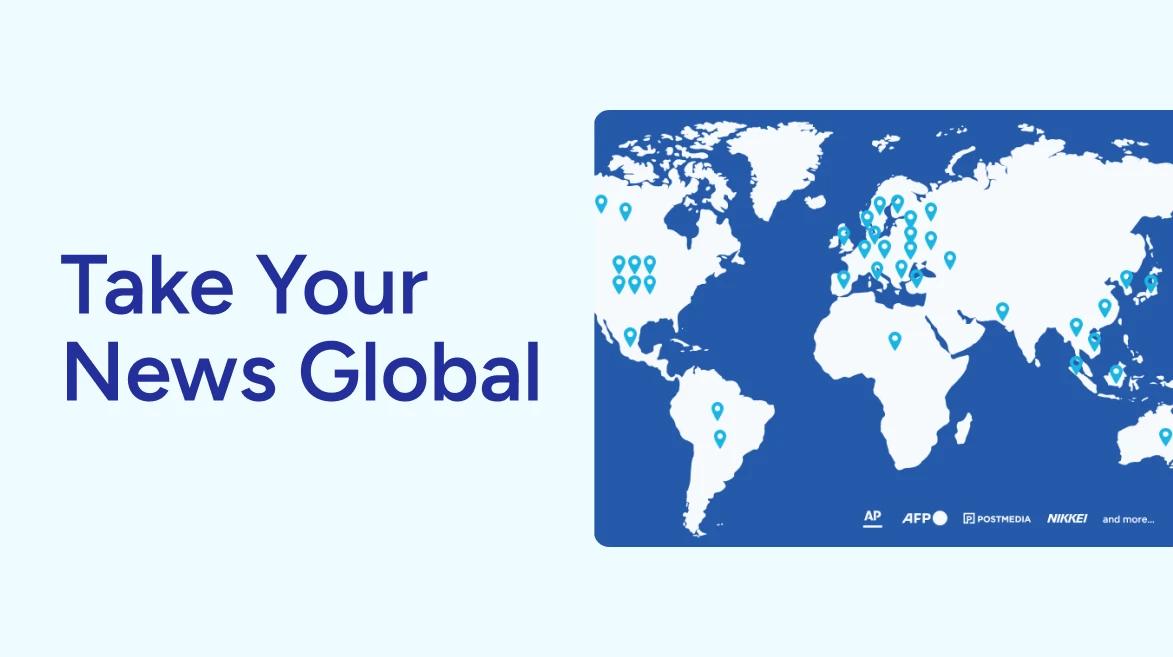
International press release distribution is the process of distributing company news outside your organization's home market through a global newswire. Depending on your communications goals, distribution may target a single country, multiple countries, an entire region, or audiences around the world.
Once issued, a press release can be delivered to media outlets, financial information platforms, industry publications, online news sites, search engines, and other trusted information sources across one or more countries. Increasingly, these same authoritative sources also influence AI-powered search experiences and large language models (LLMs), which rely on trusted content to answer questions about companies, products, executives, and industry developments.
Importantly, international distribution doesn't necessarily mean worldwide distribution.
Instead, it means selecting the countries, regions, languages, and audiences that are most relevant to your announcement.
For example:
- A company opening its first office in Germany may distribute only within Germany.
- A manufacturer expanding operations across Germany, Austria, and Switzerland may target the DACH region.
- A publicly traded company announcing quarterly earnings may distribute globally to reach investors and financial markets worldwide.
- A technology company launching across Southeast Asia may choose an Asia-Pacific (APAC) distribution.
Every announcement has different audiences, and your distribution strategy should reflect that.
Professional translation helps your news stay accurate, culturally relevant, and ready for global distribution.
National vs. Regional vs. Continental vs. Global Distribution
One of the first decisions you'll make is determining the scope of your distribution.
| Distribution Type | Best For | Example |
| National | One Country | Germany |
| Regional | Multiple related markets | DACH |
| Continental | Broader geographic regions | Europe |
| Global | Worldwide announcements | Earnings release or major acquisition |
Rather than asking, "How many countries should I choose?", start by asking: Who needs to see this news? Your audience, not geography alone, should determine your distribution strategy.
National Distribution
National distribution focuses on a single country and is ideal when an announcement primarily affects one market.
Common examples include:
- Opening a new office
- Local hiring initiatives
- Country-specific product launches
- Regulatory announcements
- Local partnerships
For example, a company entering Germany for the first time may benefit from Germany-only distribution to reach local customers, media, and business communities. If an announcement has limited relevance outside that market, broader distribution may not add value.
Regional Distribution
Regional press release distribution helps organizations reach audiences across connected markets without distributing worldwide.
Examples include:
- DACH (Germany, Austria, Switzerland)
- Nordics
- Benelux
- Latin America
- Asia-Pacific (APAC)
- Middle East
Regional distribution is valuable when countries share business relationships, supply chains, regulatory frameworks, languages, or customer bases. For example, a manufacturer expanding across Germany, Austria, and Switzerland may choose DACH distribution to reach stakeholders throughout the region, while a technology company launching across Southeast Asia may benefit from an APAC-focused approach.
Regional distribution often provides the right balance between reach and relevance.
Continental Distribution
Some announcements require visibility across an entire continent rather than a single country or region.
European product launches, multinational research reports, sustainability initiatives, healthcare announcements, and policy updates may benefit from continental distribution. This approach provides broader visibility while maintaining focus on the markets most likely to engage.
How to Choose the Right Countries for Distribution
One of the most common questions communications professionals ask is: How many countries should I distribute my press release to? There isn't a one-size-fits-all answer.
Instead of starting with geography, start with your communications objectives. The most effective international press release distribution strategy aligns with the audiences you want to reach, not simply the broadest possible distribution.
Ask yourself:
- Who needs to see this announcement?
- Where are those audiences located?
- Which languages do they prefer?
- Are there regulatory or disclosure requirements?
- Is the news relevant outside one market?
- Would regional or global visibility support your business goals?
The answers will help determine whether national, regional, continental, or global distribution is the best fit.
| If your goal is… | Consider distributing to… |
| Reach investors | Financial markets where investors are located |
| Reach customers | Countries where your products or services are available |
| Support international expansion | Markets you're entering |
| Engage partners | Regions with distributors, suppliers, or channel partners |
| Recruit employees | Countries where hiring is taking place |
| Build brand awareness | Markets where you want to establish visibility |
| Meet disclosure obligations | Markets where regulatory requirements apply |
The goal isn't to distribute to the most countries. It’s to distribute to the right ones.

Example: Expanding into Germany
Suppose your company is opening operations in Germany. Should you distribute only within Germany, target the DACH region, or consider broader European or global distribution?
The answer depends on your audience and objectives.
- If your goal is reaching German customers, local media, and business communities, national distribution may be sufficient.
- If operations also include Austria and Switzerland, DACH distribution can provide broader regional visibility.
- If Germany is part of a larger European expansion strategy, Europe-wide distribution may better support your goals.
- For major announcements from multinational companies, global distribution may be appropriate.
Example: Launching Across Southeast Asia
A fintech company launching services across Southeast Asia may benefit from an APAC distribution rather than selecting individual countries one at a time.
This approach can help reach customers, partners, investors, and media across connected markets while maintaining consistent messaging.
The goal is not the broadest distribution—it’s choosing the markets where your news will have the greatest impact.
When Should You Translate an International Press Release?
Another common question organizations ask is: Should every international press release be translated? Not necessarily.
Whether you should translate your press release depends on who you're trying to reach.
English may be appropriate when your audience includes:
- Global investors
- International financial markets
- Multinational business audiences
- Industry professionals who regularly conduct business in English
However, professional translation is often recommended when communicating with:
- Consumer audiences
- Government agencies
- Local business communities
- Country-specific customers
- Regulated industries and markets
- Regional marketing campaigns
The more localized your audience, the more valuable translation becomes.
Translation vs. Localization
Translation converts your content from one language to another. Localization goes a step further.
A localized press release adapts terminology, cultural references, formatting conventions, measurements, dates, and industry-specific language so the announcement feels natural to readers in the target market.
For example, a press release written for audiences in the United States may require different spelling, terminology, and formatting for readers in the United Kingdom, even though both markets use English.
Similarly, Spanish-language announcements may require localization depending on whether the audience is in Spain, Mexico, or Latin America.
Professional translation and localization help improve readability, credibility, and engagement while reducing the risk of misunderstandings.
Although machine translation continues to improve, professionally translated and localized press releases generally provide greater accuracy for corporate communications, financial disclosures, healthcare announcements, legal information, and other high-profile news.
For companies distributing internationally on a regular basis, multilingual press releases can significantly expand the reach and effectiveness of global communications.

International Distribution Supports AI Discoverability
International press release distribution isn't just about reaching journalists. It's also about making accurate company information available where people search for it, including AI-powered search engines and LLMs.
AI systems increasingly rely on authoritative sources to answer questions about companies, products, executives, earnings, acquisitions, and other business developments. When news is distributed through an established global newswire, it becomes available across a broad network of trusted publishers, financial information platforms, and online news sources that can influence both traditional search results and AI-generated answers.
While no organization can guarantee inclusion in AI-generated responses, distributing news through trusted channels helps improve the availability of accurate, up-to-date corporate information. International distribution also strengthens visibility by reaching audiences in the countries and languages that matter most to your business.
International distribution can help organizations:
- Publish authoritative information through trusted news sources
- Expand visibility across international markets
- Improve multilingual discoverability
- Increase geographic relevance for regional searches
- Make current company information more accessible
- Strengthen visibility across traditional search and AI-powered search experiences
International Press Release Distribution Checklist
Before distributing your next international press release, review the following checklist:
- Define your target audience
- Identify the countries or regions you want to reach
- Determine whether national, regional, continental, or global distribution is appropriate
- Evaluate whether translation or localization is needed
- Review any regulatory or disclosure requirements
- Consider time zones and optimal distribution timing
- Prepare photos, videos, logos, and other multimedia assets
- Select the appropriate geographic and industry distribution options
- Verify hyperlinks and localized landing pages
- Confirm all supporting materials are finalized before distribution
Choose the Distribution Strategy That Fits Your Goals
Successful international press release distribution isn't about reaching the most countries. It's about reaching the right audiences in the right markets.
Whether you're entering a new country, expanding across a region, launching a product internationally, or sharing global news, your strategy should align with your business goals, target audiences, language needs, and regulatory requirements.
A thoughtful distribution approach helps improve visibility among the stakeholders who matter most while supporting discoverability across media, search engines, financial information platforms, and AI-powered search experiences.
Business Wire's global news distribution network, geographic targeting options, multilingual press release services, and industry expertise help companies reach the audiences that matter most across international markets. Our solutions support visibility across media, search engines, and AI-powered search experiences.
Explore Global Distribution Services Ready to send a release?